

 Andrea Nagel
From leadership appointments and inclusive brand-building to K-beauty expansion, founder support, and the evolution of men’s grooming, today’s headlines highlight how beauty brands are creating new pathways to long-term relevance.
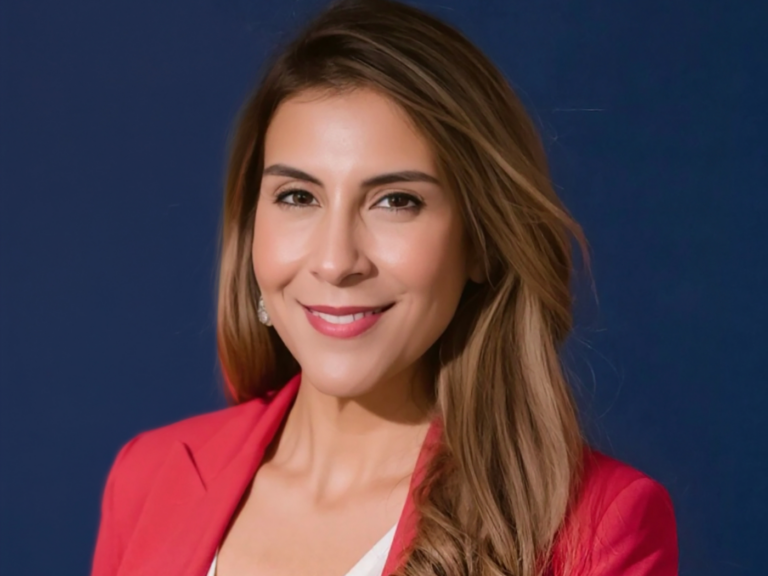
People remain one of beauty’s greatest competitive advantages, and L’Oréal is reinforcing that belief with a key leadership appointment. The company has named Rahquel Purcell as its next Chief Diversity, Equity & Inclusion Officer, North America, effective immediately. In this role, Purcell will report to Alexis Perakis-Valat, CEO, L’Oréal USA and President, North America. She will continue to sit on the management committee of L’Oréal USA as well as the global leadership team of Margaret Johnston-Clarke, L’Oréal’s global Diversity, Equity & Inclusion Officer. “I’m honored to bring my experience leading Operations, Supply Chain and Transformation to help advance the L’Oréal culture and to connect strategy, people and execution to harness the value of difference and drive business growth,” said Purcell. “We have phenomenal products, leading innovation capabilities and best-in-class consumer insights, and I’m eager to partner with our brands and leverage these core assets to create authentic connections with diverse consumers and communities.” (L’Oréal USA)
While corporate leadership shapes long-term strategy, brands such as Gold Bond are simultaneously evolving how they engage consumers. Following the launch of Gold Bond Scented Hand Creams in January, the company’s first foray into fragranced skin care, it has just unveiled a trio of Scented Body Creams, and announced a new brand ambassador, Ali Larter, during an activation at Montana’s Under The Big Sky festival. CEW sat down with Danielle Prencipe, Director of Marketing at Gold Bond, and Martyna Dobkiewicz, Senior Brand Manager, Innovation, to discuss how the range with a 100-year-strong reputation for formulating science-backed, clinically tested skin care is innovating for the future and engaging new consumers, while delighting devotees. (CEW)
Innovation is also being fueled by investment in the next generation of entrepreneurs. To support this, Rare Beauty Brands is once again opening the door for emerging founders through its LIFT Beauty Accelerator. Parent company of Patchology and Kate Somerville Skincare, Rare Beauty Brands has reopened applications for its LIFT Beauty Accelerator, a reimagined version of its long-standing brand support program launched in 2021. In partnership with JCPenney, the initiative provides funding, mentorship, and retail access to underrepresented beauty founders. Now entering its third year under the LIFT name, the program continues to evolve as a platform for early-stage brands to gain traction, scale thoughtfully and build lasting community. In 2026, three founders will be selected to receive non-dilutive capital, executive mentorship, in-kind services, and the opportunity to pitch for distribution with JCPenney. (GCI)
At the same time, beauty investors are finding opportunity in categories that have matured beyond products alone, such as premium barbering. The category is having a second act, and this time, it is backed by institutional capital, franchise infrastructure, and a very different playbook. Two decades after The Art of Shaving, Grooming Lounge, and their peers introduced American men to premium grooming as a retail category, a new wave of brands including Barberino’s, Boardroom Salon for Men, and others is rebuilding the barbershop as an investable, scalable asset class. The market fundamentals support the bet. The global men’s grooming products market is valued at roughly $66.44 billion in 2026 and is projected to reach $90.21 billion by 2031, growing at a 6.31% CAGR, with premium lines outpacing the mass segment, expanding at a 7.52% CAGR compared to mass-market products. That premiumization tells the story that men are moving away from buying more grooming products, into paying significantly more for the experience wrapped around them. (Beauty Matter)
Retailers, meanwhile, continue to compete by bringing the world’s most sought-after beauty trends directly to consumers. And Sephora’s landmark partnership with Olive Young represents one of the most significant K-beauty launches in the U.S. market to date, further validating the category as a strategic priority for prestige retail. Launching Aug. 20, the joint venture brings 19 Olive Young-curated Korean beauty brands to 500 Sephora stores in the U.S. and sephora.com, with expansion planned across key global markets. The participating brands include Cell Fusion C, Rejuran, Thome, Wellage and Whipped, among others. Prices range from $4 to $69 for skin care and up to $299 for devices. For Sephora, the move enables it to become a serious player in K-beauty retail. “It’s definitely one of the biggest launches that Sephora is planning for this year, and certainly over the course of time will be one of our biggest,” said Carolyn Bojanowski, Executive Vice President of Merchandising at Sephora. “It’s also a super unique way to bring Korean beauty to the U.S. consumer. Lots of retailers are playing here. But what makes this stand out is the credibility. We know this is the best of the best.” (WWD)
Beyond products and retail, beauty is increasingly intertwined with culture and identity. The New York Times explores Provincetown’s Bear Week, illustrating how communities continue to redefine traditional beauty ideals and celebrate authenticity, self-expression and body confidence. One example recently found Steve August and TJ Howe wandering through a crowd of hundreds of men gathered on the deck of the Boatslip, asking if anyone had encountered problem bears. They were prepared, they said, to stop bears from eating your dinner. This year though, the real problem was different. This year, the bears were harder to find. Howe and August brought their costumed shtick to the final night of the town’s Bear Week, an annual bacchanal at the gay vacation destination on the farthest reaches of Cape Cod. The midsummer festivities are a celebration of bears — a favored term of self-identification for many gay men who are bigger and hairier. It’s a time when the ordinary archetypes of gay male perfection, with their waxed chests and trim waistlines, take a back seat to those with beards and bellies. (The New York Times)
To read more about these stories, click the links below.
L’Oreal Appoints Rahquel Purcell as Next Chief Diversity, Equity & Inclusion Officer, North America
Gold Bond Blazes a Trail in Body Care While Honoring Heritage
Men’s Grooming Second Coming Has a Business Plan