


 Faye Brookman
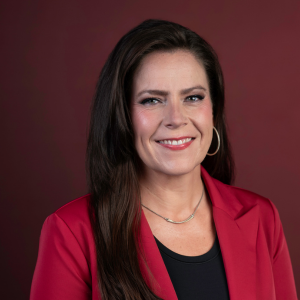
Michelle LeBlanc doesn’t just think outside the beauty box — she’s rebuilding it. As Vice President of Merchandising for Beauty, Personal Care, and the Hispanic Strategy Team for CVS Health, LeBlanc is rewiring the traditional drugstore beauty department from the ground up, reshaping it to reflect how today’s consumers actually shop, not how they shopped a decade ago.
Consumers increasingly view skin care, personal care, health, and wellness as interconnected categories rather than distinct shopping missions, according to LeBlanc.
For CVS Pharmacy, that convergence is creating an opportunity to enhance how beauty is merchandised, localized, and made easier for customers to navigate — rather than the endless and sometimes confusing aisles often associated with the mass market channels.
“I’ve spent almost two decades at CVS Health within finance, healthcare merchandising, strategy, and transformation. And if there’s one thing that’s stuck with me, it’s this: customers don’t live their lives in silos, so why would we make them shop that way,” she said.
That thinking has a major impact on the beauty business which today is much more than lipstick and perfume. “Beauty used to live in its own little lane. Not anymore. Today, people don’t separate beauty from health from wellness. From skin care to body care, to personal care, the consumer is focused on living with vitality, inside and out, head to toe. Shoppers deserve to have access a broad range of products in a way that’s convenient, attainable, and approachable,” she said. “We happen to sit right at that intersection, which is a pretty good place to be,” she added.
CVS is harnessing the advantages of its footprint — 85% of Americans live within 10 miles of a store — and its deep insights into its consumer base, to revamp its shopping experience for the way contemporary consumers shop.
The ongoing evolution of its stores positions beauty within the context of the way consumers cross shop categories, and that is being reflected in new ways the categories are presented in stores.
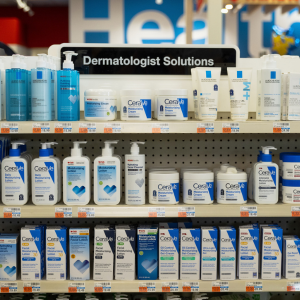
“The skin care format we launched last year is a perfect example: making the category easier to navigate has already driven real growth in sun care and skin care. It pairs the trust people already have in CVS with trained in-store support, smart curation, and the fun of actual beauty discovery nationwide, not just in a handful of flagship stores.”
Another example is hair care, where CVS research indicated that men surveyed shop drugstores for their beauty and wellness products. Earlier this year, CVS pulled its men’s hair products into one shop that has experienced triple-digit growth of those brands.
CVS is also transforming its beauty business through localized assortments, product education from trained Beauty Consultants, emerging brands and a growing focus on skin care and everyday wellness.
That evolution comes as beauty shoppers become increasingly informed — and, in some cases, overwhelmed — by the volume of information and product choices available to them.
“The consumer is as educated as they’ve ever been. We’ve never had more access to information, and somehow that’s made everyone more confused, not less. Everyone’s a skin care expert on a Tuesday and completely lost by Wednesday,” she said. Shoppers want help understanding product features, how products may fit into their routine, and whether they really need six steps.
For CVS, the opportunity is to use its scale and heritage in health and wellness to help simplify the beauty-shopping experience.
“That’s where we come in. We bring an assortment that reflects our deep heritage in beauty, health, and wellness. We have built real trust with our community through our history of bold moves and yet, we do it in a way that’s approachable. Because at the end of the day, we know we’re part of our shoppers’ lives. It’s why we call ourselves your whole-body beauty bestie,” she said.
One of the more significant opportunities for CVS is the ability to use its store network to make beauty assortments increasingly relevant at the local level.
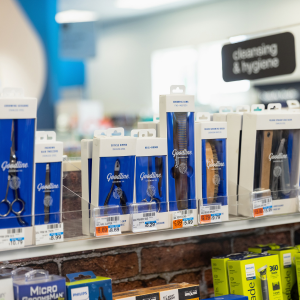
“What has changed is the depth at which we can now curate, because we have new tools and capabilities that are allowing us to identify market trends, that perhaps, historically, never hurdled the merchant’s performance bars. Now, they can see when there are smaller, regional brands popping in certain areas, or a need state that is a white space opportunity,” she said.
Instead of making brand/assortment decisions in thousands of doors, the retailer has the ability to do it in 50, 100, or 200 stores. “Getting curation down to a deeper level allows us to continue to curate an assortment that is representative of the community we’re part of,” she added.
That approach has implications for both established and emerging beauty brands. For smaller brands, localized distribution can provide an opportunity to establish a retail presence without immediately requiring a nationwide rollout. For CVS, it creates another mechanism for testing relevance and identifying emerging consumer needs.
The strategy extends to CVS’s Hispanic Strategy work. LeBlanc pointed to the expansion of the Epic Beauty Sale into 30 Navarro stores in Florida as one example, with the promotion presented in both English and Spanish. CVS also continues to develop localized assortments across its y Más and Navarro stores.
“Community-level relevance means paying attention to how people actually live, not just what a national trend report says they should want. It’s tailoring assortments to local market demand, elevating brands that reflect the communities we serve, and making the in-store experience feel like it was built for the person standing in it—because it was,” she said.
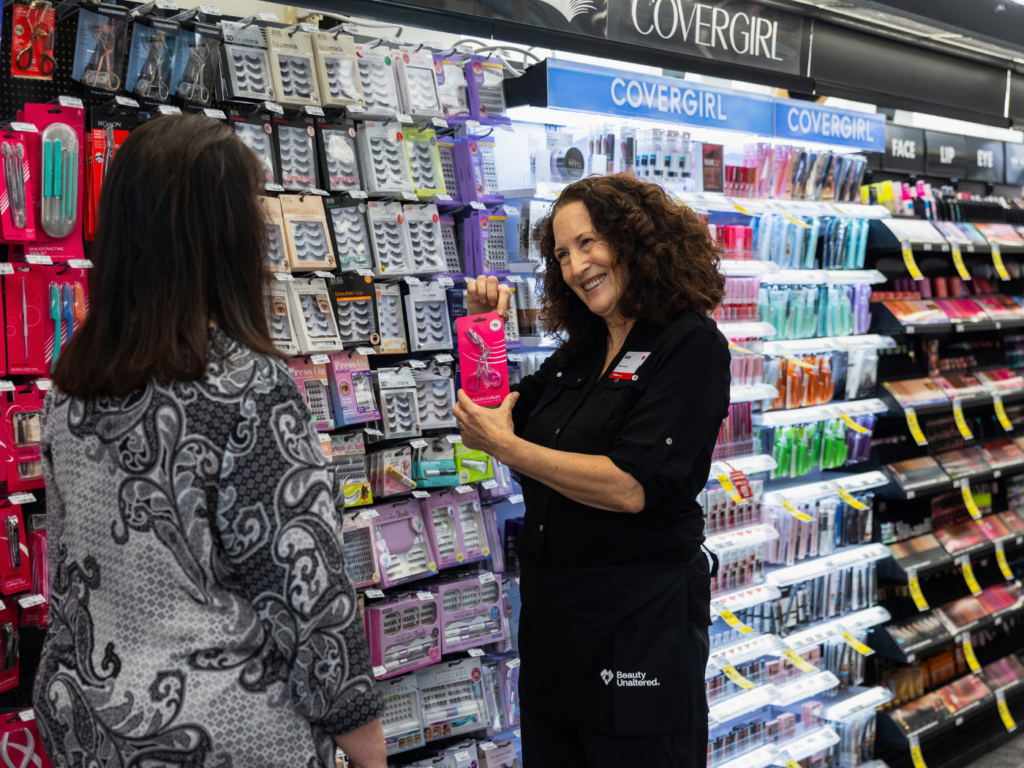
The retailer is also putting more boots on the ground with additional trained Beauty Consultants in its stores. The retailer currently has more than 700 Beauty Consultants aligned to more than 550 stores across 17 states and Washington, D.C. who receive onboarding, ongoing education, and training on new launches.
“The result is support that feels knowledgeable and human. Our Beauty Consultants are trained to help customers navigate the product assortment.”
LeBlanc said the consultants also play an important role in CVS’s localization strategy because their proximity to shoppers gives the company another source of insight into what is resonating in individual markets.
The company further expanded its skin care education resources in 2025 with the addition of Dr. Camille Howard as CVS Beauty Dermatologist Advisor. According to LeBlanc, CVS increased skin and sun care training by more than 25%.
“We’re a healthcare company first, so trust isn’t a nice-to-have for us. Instead, trust is something we’ve built with our consumers over time. And now with beauty and wellness deeply intertwined in our shoppers’ minds, that trust matters more than ever,” she said.
The goal is to combine informed product education with an accessible retail experience.
For beauty brands seeking retail distribution, CVS’s strategy also highlights the importance of having more than a strong social media presence.
“Trendy and trustworthy can absolutely coexist. We love bringing customers something new and exciting, but virality alone doesn’t earn you shelf space,” she said. CVS evaluates emerging brands based on their ability to address a consumer need and demonstrate potential beyond an initial burst of attention. Some of the new additions to CVS shelves include Daise, Vacation, Bask, Curology, Mando, Color Wow, and Lume, reflecting its interest in brands that combine cultural relevance with a defined consumer need, according to the company.
“When we’re evaluating a brand, we’re asking the questions that matter beyond the buzz: Will this actually resonate with our customers? What real need does it solve? And will someone still be using it in three months, after the hype has worn off,” she said.
Her advice to emerging brands is straightforward: establish a clear value proposition and make sure the product itself can drive repeat purchase.
Operational readiness is another consideration.
“Are you operationally ready? Do you have the supply chain readiness to ensure your product shows up on our shelves consistently? If not, that brand trust is gone even if you’ve done everything else right.”
The growth of emerging brands does not mean moving away from established names. Instead, LeBlanc sees the two as complementary elements of the assortment. The company is continuing to support heritage brands while expanding priority categories to include skin, scalp, and dermatologist-tested.
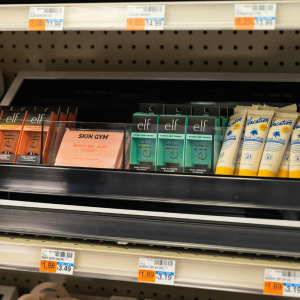
“I don’t see this as an either-or. Customers want the products they already know and trust sitting right next to what’s new and exciting. They just don’t want to have to go searching to find either one. That’s where our approachable footprint and curation come into play.”
For CVS, that translates into an assortment strategy focused less on maximizing SKU count and more on helping shoppers navigate the category.
“We’re focused on clarity over complexity, and discovery without confusion. Success was never about cramming more SKUs onto a shelf. It’s about whether the customer finds the product to meet their needs,” LeBlanc explained.
Minis are another component of the strategy, creating a lower-commitment entry point for both established and emerging brands. CVS’s expanded minis assortment launched in about 2,700 stores last fall and expanded into 1,200 additional stores this summer. LeBlanc said the assortment has generated 140% year-over-year growth in 2026 so far and includes brands such as Vacation, Batiste, Mario Badescu, Lume, NYX, and Tree Hut.
“Turns out try it before you buy the full size never goes out of style,” she added.
As CVS continues to evolve its beauty business, LeBlanc said the focus will remain on simplifying navigation, expanding product education, sharpening curation, and creating more opportunities for discovery.
For beauty brands and industry partners, the strategy points to a retail environment in which scale alone is no longer the only advantage. Localization, education, operational readiness, differentiated products, and the ability to meet specific consumer needs are increasingly central to earning and sustaining retail relevance.
“Because at the end of the day, beauty should still feel joyful and help keep them excited about what they’ll find next time they walk in.”